- Craft
- Basics
What FPV cinematography is, and when we reach for it
· 2 min read · Manmadecinematics
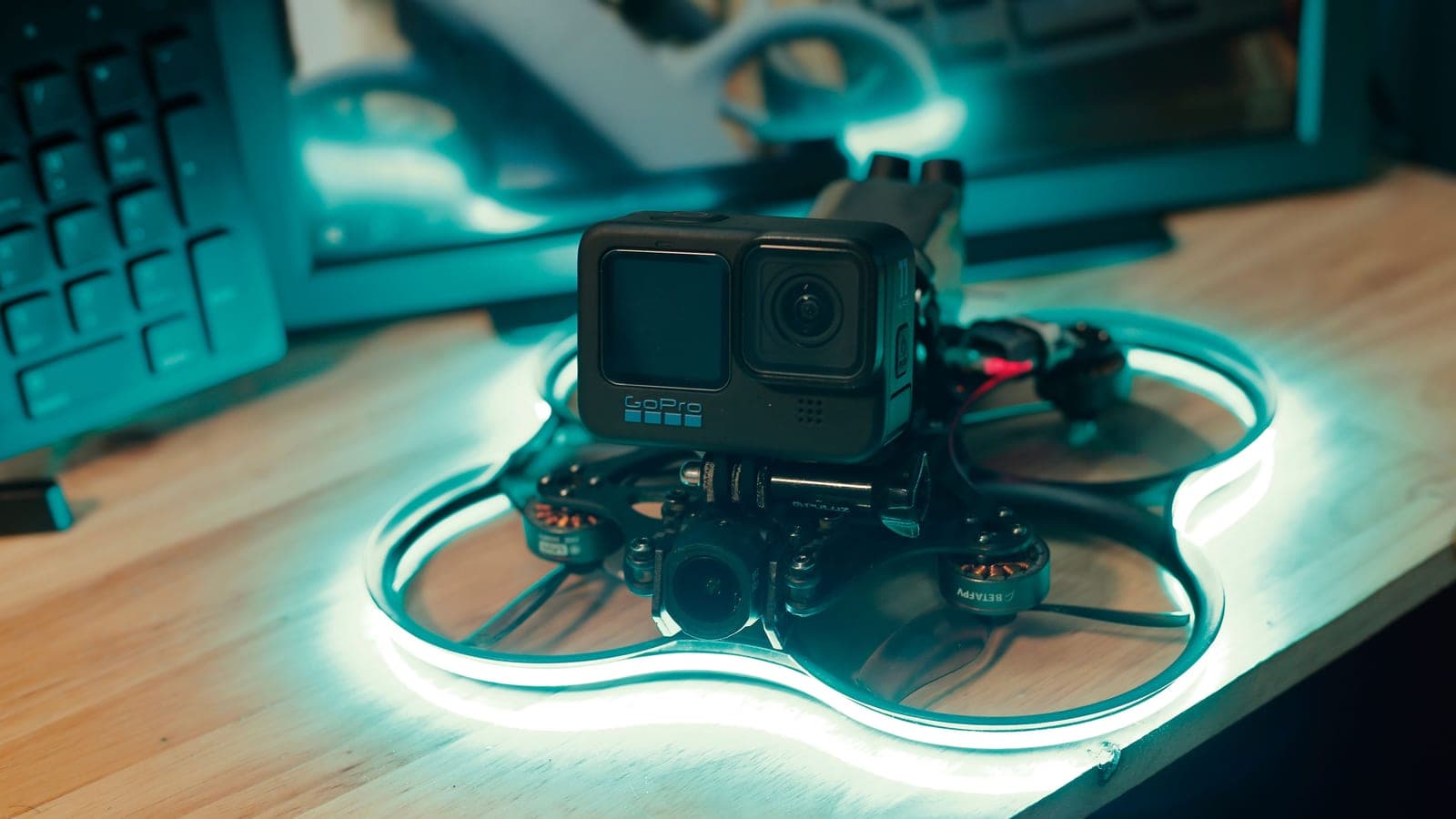
FPV stands for first-person view. The pilot wears goggles that show the live feed from the camera and flies the aircraft as if sitting inside it. There are no waypoints and no automated flight path. Every bank, dive and correction is made by hand, in response to what the lens sees at that moment.
That is the whole idea, and it is why the footage feels different. A crane, a track or a gimbal moves along a line someone has built for it. An FPV drone moves the way a bird or a skier does: continuously, with weight, and with the freedom to change its mind halfway through the shot.
What it gives a film
- Proximity. The camera can pass close to a subject, a surface or a gap without a rig or a crew in the way.
- Continuity. A move that would take three cuts on conventional equipment can run as one unbroken take.
- Reveals. Starting tight on a detail and opening out into the landscape, or the reverse, is natural to the format.
- Energy. Speed, banking and changes in height read on screen as emotion, not just movement.
What it is not for
We do not use FPV for a calm, symmetrical or locked-off shot. A larger camera drone or a tripod does that better. FPV aircraft are also small and light, so wind and rain affect them more, and a single battery gives only a few minutes of flying. Every FPV shot has to be designed around those limits.
Use FPV when the movement is part of the story, not just a way to make the footage look expensive.
The question we ask first
Before we plan a flight we ask what the viewer should feel in this shot. If the answer is speed, closeness, discovery or momentum, FPV is a strong candidate. If the answer is stillness, scale or order, something else is probably the better tool, and we will say so. Rules for flying differ by country and by location, so we check what is permitted before any shoot is planned.